20 June 2000

Gallery 19 closes

Another CBD `stepping-stone' Goes Under

By Nick Leys

When Gallery 19 closed its doors last Wednesday night a space where one of Sydney's few remaining artist-run galleries has displayed over 300 artists for the past two and a half years the invitation was more like an end of financial year closing down sale.
Several hundred well-wishers responded to the ``EVERYTHING MUST GO!'' bugle call, cramming into the previously disused coffee shop where artists including Adam Cullen, Max Cullen, Maclean Edwards, Simeon Nelson and indigenous artist Harry Wedge have hung their works.
Gallery 19's final exhibition called on displayed artists for a $20 donation ``to help meet our considerable wind-up costs'', with the gallery taking its usual zero per cent commission fee for sales.
A member of Gallery 19's 10-strong management committee, Michael Hutak, said the reason for the closure was the sale and redevelopment of the premises in the prime location of Campbell Street in Haymarket, opposite the Capitol Theatre.
``We were only able to keep the gallery going for so long because of the cheap rent, $300 a week on a month-by-month lease,'' he said after the doors had been shut for the last time.
``That's the only way you can run an artist-run space -- precariously.''
Gallery 19 is just the latest such display space to come to an end. In the last two years, other artist-run galleries like 151 Regent Street, Pendulum Gallery, Side-On-Studios and South have succumbed to rising rents in and around the Sydney CBD, a situation exacerbated by Olympics-driven redevelopment.
``The reality of the inner-city property market means the rich tradition of artist-run spaces in Sydney is coming to an end,'' Hutak said.
``I'm sad it's over, but glad we were able to get away with it for over two years.''
Archibald Prize winner Adam Cullen credited Gallery 19 and other spaces as crucial to his development as an artist.
``If these sorts of environments end, it sort of rings the death knell of art,'' he said.
``Artist-run spaces showcase art that is very fresh. It is straight from the artists' studios and so is usually of the best quality. I started in them, exhibiting in them for 10 years before being taken on by a commercial gallery those spaces are where dealers and owners get artists from.''
Fellow artist Mark Titmarsh said these spaces were of great importance for artists wishing to experiment with different media.
``They are definitely spaces for experimental artforms they quite often showcase the art of the future from up and coming artists,'' he said.
``They are the stepping stone between art school and commercial galleries.''
Anna Waldmann of the Australian Council of the Arts, which funds some artist-run spaces through the Emerging Artists Scheme, agreed the spaces were an important platform for emerging artists, but said they were always ``coming and going''.
``They are very fluid; that is their nature,'' she said.
---

First published in


25 April 2000

Losing Tickets, Gallery 19 -- press coverage

Odds-on favourite

Michael Hutak's "tribute to the little punter" is a cool reworking of the "found" object the artist's failed betting tickets. Exhibited in the genteel, poverty-stricken surrounds of Gallery 19, the visual gesture creates a kind of wallpaper, combusting high modernism and lowly craft. The art of the racetrack is one place where aristocracy and the herd meet, not only in Landseer's and Wallinger's world, where the racehorse is more inbred than bred, but in egalitarian Australia too, where 17 cents in the betting dollar is squirrelled by government. This mug punter's Losing Tickets are scanned, mounted laserprints. Their pristine surfaces resemble more the calligraphic registrations of Marinetti's speedy posters than any humble betting tabs. In the reprocessing of such objects, questions of ethics and more take turns, for Hutak was once a racing journalist. However, a nose for the track is not needed to rate this finely edged show. Phone 9212 4776. Until Saturday. 
The Galleries - Courtney Kidd, 2 May 2000, Sydney Morning Herald.


---

Colourful racing identity

IF you spent five years trawling the racetracks of NSW and then found a job in the artworld, what would you do on weekends. Former Gadfly columnist Michael Hutak put to use his days spent scraping up the seamy side of the track by collecting bookmaker's betting tickets. He has blown them up, put them on a wall and that's art, baby, opening in an exhibition at Gallery 19, Haymarket, on Tuesday. Hutak says Losing Tickets is a "tribute to all punters who have done their dough'', i.e. Australia. 
- Candace Sutton, 23 April 2000, Sun Herald.


21 April 2000

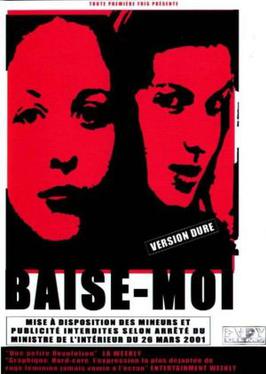
Baise-moi (2000)

CAST: Raffaƫla Anderson - Manu; Karen Lancaume - Nadine
CO-DIRECTORS: Virginie Despentes, Coralie Trinh Thi
CO-WRITING CREDITS: Virginie Despentes, Coralie Trinh Thi, adapted from Despentes’s novel.
PRODUCERS: Phillippe Godeau, Dominique Chiron
DISTRIBUTOR: Wild Bunch

IN A NUTSHELL:

In a grimy contemporary urban France, Nadine (Lancaume), a bored prostitute, and Manu (Anderson), a rape victim, hook up by chance and hit the road on a wanton sex tour and thrill-kill crime spree, fucking and killing almost anyone who wanders into camera-shot, and attracting a manhunt with inevitable consequences.
---

So extreme it was banned in its native France, BAISE-MOI is screening here as ‘FUCK ME’, and in the US as ‘RAPE ME’. While you're at it, you could add ‘SHOOT HER’, ‘STOMP ON HIS FACE’, ‘BLOW THIS OUT YOUR ARSE’ and ‘FUCK YOU TOO’. Starring two actual porn stars, co-written and directed by a female team whose credits include 'CUNT SUCKING SLUTS 5', this psychotic yet ice-cool satire is a rotten stew of gratuitous violence, actual hard core sex, and feminist buddy flick, shamelessly referencing THELMA & LOUISE. 

The Office of Film and Literature Classification reckons STRONG SEXUAL VIOLENCE, HIGH LEVEL VIOLENCE, ACTUAL SEX, and ADULT THEMES, and that’s a fair call: a rape scene that repels you from the screen is the prelude to a rampage of quasi-feminist revenge, a brutal, sadistic assault on the world of the film and those that have to view it. That said, if you can stomach the violence – which is no less brutal than a thousand American teen horror flicks. And if you can ‘handle’ pornography the two leads can really act. 


This is ultimately a bitter place where ‘the money shot’ meets ‘Iron Jane’ polemics meet arthouse pretensions. Despite being designed to solicit maximum mass-media outrage, BAISE-MOI will probably have more lasting impact on the adult film industry it pillories, parodies and attacks.

ANY GOOD?

Is it just payback for every act of sexual violence against women shot on film? Or is it merely a bunch of porno professionals out to demonstrate that punk’s not dead? Either way, the filmmakers couldn’t care less what we think: ‘FUCK US’.

** (Two stars)

---

First published in Empire

1 April 2000

2001: A Space Odyssey -- preview capsule


Dir: Stanley Kubrick

Released at the height of psychedelic hysteria, Kubrick’s supra-philosophical mind fuck was billed as the ultimate trip, but was dismissed by critics as little more than a ponderous light-show with a few riddles thrown in for diversion, and thus didn't rate even a nomination for Best Picture at the 1969 Oscars. Carol Reed’s musical, Oliver! won that year, with Kubrick nominated for Best Director but also losing out to Reed. Thirty three years later, if you haven’t seen 2001 on the big screen, then take the chance while it’s going. But if you’re all Kubricked out - and who isn’t after the orgy of hype surrounding the maestro’s death and the release of Eyes Wide Shut - rent Oliver! instead and see what all the fuss was about.
---
First published in Australian Style magazine, national. April 2000

12 September 1999

Interview: Ken Done


Soon to open an exhibition in a upmarket shop, artist Ken Done remains an enigma, writes Michael Hutak.

THIS month one of Australia's best-known artists will open an exhibition of his work and launch a book to celebrate 20 years at the easel.
Perhaps unusually, it will not take place in some trendy gallery or cloistered museum.
It will be held on September 22 at the Elizabeth Street store of David Jones. Impresario Ric Birch will be master of ceremonies.
But then, the subject of this gathering is no ordinary artist. It is Ken Done . . . and already the art world is sharpening its knives.
Loved by the masses and loathed by elites, Done is the riddle of Australian art. In the 80s they said he'd never make it. And as far as they are concerned, although just about every Japanese visitor goes home with a piece of his work, he is still an outsider.
He is represented by no commercial gallery, doesn't figure in any major Australian corporate collections, has no works in any major state or national gallery and is virtually absent from fine art auctions.
His relentlessly sunny, day-glo approach to art has seen him almost universally dismissed as merely decorative and profoundly lightweight.
Every article about Done's art is duty bound to recycle the late Brett Whiteley's ultimate put-down: "I'd rather have methadone than Ken Done." It is his crown of thorns and crystalises how Done's work is held by the art establishment.

"I am the least commercial artist in Australia," Done lamented from Perth, on his way to Paris, where he will unveil a seven-metre square artwork that will hang outside the Australian Embassy until the end of the Olympics next year.
"I spend no time courting or trying to influence people in the art world, no matter if it's Sherman Galleries or Billy Bloggs. I just like to make pictures, I like being a painter. I'm 59 now and I've been painting pretty much solidly for 50 years and I only feel like I'm just getting started."
Certainly the most commercially and internationally successful designer this country has produced, when it comes to his art Done is the vanishing point where art meets commerce.
The more the world perceives him as successful, the less currency his "serious" art has in the established art world.
But it's precisely this recognition that money can't buy that Done clearly craves.
"Everybody wants people to understand what they do.
"If you're an Australian painter, it's only natural that you should desire that you're work is good enough to be hung in the National Gallery of Australia. It's what I am striving for and I don't shun that sort of recognition at all."
But what he has shunned is the traditional stepladder to acceptance in the art world. His profile has been due to self-promotion. Since his first public exhibition in 1980, Done has applied a business strategy of "vertically integrated marketing" to promote his artwork - he is the creator, producer, distributor and retailer of his own art. Since that first exhibition, he has run a gallery which sells only his work.
"I've never had a government grant and I've never wanted to be part of somebody else's stable," he said. "Opening my own gallery is no different from a chef opening up a restaurant. What I am doing is managing an artist-run gallery."
To art world outsiders - ie, the public - ignorant of this strategy, it might appear that Done already has all the success and acceptance he might desire. For instance, next week his long-time friend Ric Birch will launch a book, Ken Done, Sydney, celebrating 20 years of Done's visual love letters to the harbour he adores. The book will coincide with a major retrospective of his paintings.

SERIOUS art investors look upon a retrospective as a signal to start buying.
Done's retrospective is different. It's being held at David Jones's Elizabeth Street store and has been mounted by Done in conjunction with the retailer and greeting card company The Ink Group, which has published the book, again in conjunction with Done.
His daughter, Camilla, designed the book.
A David Jones representative told The Sun-Herald: "Exhibitions like this are only mounted when they are product related."
Thus a plethora of Done Design products will be on sale. But this strategy is nothing new for Done.
"I'm not going to die to prove the point, but the Art Gallery of NSW is quite happy to put Matisse and Picasso on T-shirts and coffee cups and then point to how it's helped their bottom line on the balance sheet," said Done "I'm just trying to do the same thing while I'm alive."
Done has at least one champion in the form of Powerhouse Museum director Terence Measham. Measham has written extensively on Done and in 1995 mounted the only significant exhibition of Done's design work in Australia.
"I feel very strongly that he should be included in State collections," said Measham. "I can't understand why you wouldn't want to. The onus should be on these directors to say why they don't collect him. Certainly there are many artists in State collections who are no better than him."
The only works by Done in the National Gallery of Australia are some textile designs done for Sheridan, which the manchester manufacturer donated.
In the National Gallery of Victoria it's the same story.
"We have no works by Ken Done," said contemporary art curator Jason Smith. "Nor are they a priority for the collection."
Art Gallery of NSW contemporary art curator Victoria Lynne concedes that Done "is a significant and very successful Australian designer with a very popular aesthetic.
"But I wouldn't say he has made a significant contribution to contemporary Australian art practice. His work is too much on the decorative side to be included in our contemporary collection."
In the early 60s Done went to Japan for the first time and has been returning since. It is in Japan that his art is most seriously regarded. His works sell for up to $50,000.
In 1965 he went to Mexico and New York before settling in London, where he would spend the next five years as creative director of advertising agency J Walter Thompson.

RETURNING to Sydney in 1970, he continued in advertising, but "somewhere around my mid-30s I realised there was no short cut to painting.
"So I gave up advertising totally and had my first show in June 1980 and I've been painting three to five days a week ever since."
While Done has devoted himself to coming up with the designs and images, it his wife, Judy, and two adult children - Camilla, 28, and Oscar, 23 - who run the Done merchandising and marketing empire with an estimated annual worldwide turnover of $50 million.
"Me?" he asks. "Ninety per cent of what I do today is simply studio-based painting."
In another context, Done would be happy to sing the praises of his business. Today, when we're talking about Ken Done, the artist, not Ken Done the brand, he plays it down.
"It's just a tiny Australian business is all. We have 10 shops across Australia and our gallery in the Rocks, and we distribute our merchandise throughout the world."
It's hard to feel sorry for Ken Done.
The only Australian artist to make the BRW rich list, Done lives in an idyllic beach house on millionaires' row overlooking Chinaman's Beach in Mosman, where he paints to his heart's content.
But still the weight of the world seems buried just below the surface of his positive spin-doctoring. The issue of his artistic credibility clearly dogs him as he lets out a heavy sigh.
"I've never tried to to be confrontational. Whatever it is I'm doing, my aim is always to make it as good as it can possibly be. All I can say is I'm trying my best."

T-shirts turn off auction houses
AT the Ken Done gallery in The Rocks, large canvases are on sale for up to $17,000. Yet since 1989 just four of Done's paintings have been offered at public auction.
Three were passed in and the other, a gouache and oil painting on paper titled Mosman Festival (1990), sold for a meagre $742 at Lawsons auction house in Sydney in September 1997.
Georgina Pemberton, paintings expert at Lawsons, is blunt: "I usually discourage people from bringing his works in because there simply isn't a market for them.
"The auction market is for serious, established artists."
"It's a question of should I buy one of his paintings or one of his T-shirts?"
Annette Larkin, Australian paintings expert at Christies' auction house, says Done has been "a fantastic entrepreneur and ambassador for Australia, but as far as being a serious artist is concerned, I'm sure he has his collectors, but you rarely see his work coming through the sale room."
The Sun-Herald asked Done why any serious collector with an eye on investment should buy his works?
"Because they love them! My works don't appear at auction because my buyers don't sell them, they keep them."

* Michael Hutak is editor of Australian Art Collector Magazine.

KEN DONE AT AUCTION SINCE 89

* Oil Paintings

Total offered: 4

Number sold: 1

Mosman Festival (1990), gouache and oil crayon on paper, initialled lower right, 62 x 45 cm. Lawsons Sydney 16/09/97, lot 124. Estimate: $400-$600 - sold for $742. Mosman Festival (1990), 8-18 March, gouache and oil crayon on paper, initialled lower right, 62 x 45 cm. Lawsons Sydney 10/12/96, lot 263. Estimate: $1,400-$1,600 - Not Sold. From The Studio Window (1991), oil on canvas, 75 x 102 cm. Lawsons Sydney. 20/09/94, lot 326. Estimate: $3,000-$5,000 - Not Sold. Morning Glory And Nasturtiums (1979), oil crayon, 42 x 43 cm. Lawsons Sydney 12/09/89, lot 137. Estimate: $4,000-$5,000 - Not Sold.

* Watercolours

Total offered: 4

Number sold: 2

Average price: $600

* Other media and drawings

Total offered: 2

Number sold: 2

Average price: $375

* Prints and graphics

Total offered: 13

Number sold: 12

Average price: $251

Source: Australia Art Sales Digest

----


Date: 12/09/1999
Words: 1326
Publication: Sun Herald
Section: News
Page: 58

9 August 1999

Where the art lies in the challenge


BURNING QUESTION: Why can't Sydney support a contemporary art museum? 

SYDNEY'S declining reputation as a favourable environment for contemporary art, lagging behind not only that of Melbourne but increasingly Brisbane and Perth, is clearly illustrated by the Museum of Contemporary Art's near-death experience.

On Friday, Premier Bob Carr finally came to the party, announcing a $750,000 bail-out which will see the MCA clear to the turn of the millennium. And Sydney University, the MCA's parent body, has deferred a $600,000 debt.

The 11th-hour reprieve had much to do with incoming director Elizabeth Macgregor. But as usual, the politics of arts funding always comes with strings attached.

Describing Macgregor as "energetic" and "renowned for popularising contemporary art", Carr also set out the criteria by which his Government will judge her tenure at the museum: "Her task will be to attract new audiences to contemporary art in Sydney."

Macgregor, a Scottish arts administrator who starts next month, inherits an organisation characterised as an economic basket case and a cultural failure.

Born out of private bequest and public sector largesse, the MCA has always laboured under the unreal expectation that it could pay its own way as a self-funding commercial enterprise.

Its job should have been to develop a balanced program which would bring the true diversity of Australian contemporary art to a wider public, but instead of developing a grass-roots support base it was out chasing corporate dollars or seeking to entice social-climbing yuppies with free champagne.

Meanwhile, back at Sydney Cove, the most congested public precinct in the nation, the general public preferred the free views of the Opera House to the MCA's $9 admission fee.

Of course, there's a popular view that the problem is simply contemporary art itself. Making art isn't illegal yet, but you'd be forgiven for thinking that our artists stand guilty of crimes against culture, such is the dismissive vitriol heaped by conservative critics over the years.

Controversy-seeking philistines will always be ready to peddle the view that contemporary art is a sick joke pulled at the public's expense by a crew of talentless, shameless shysters.

There's no denying it can be mighty puzzling if you turn up expecting pretty pictures and are confronted with a room full of bored half-naked women, or a 30m puppy made out of shrubs. But challenging our expectations is what the best art has always done.

Sydney can support a museum of contemporary art, but it needs more champions of the art itself; more critics who actually like and understand contemporary art, and are able to convey their passion and insight to the rest of us.

Meanwhile, Macgregor is being hyped as the art-world equivalent of Police Commissioner Peter Ryan. But it beggars belief that an Australian with local knowledge, a passion for art and a talent for business could not be found.

We can host an Olympics but we can't run our own art galleries.

MICHAEL HUTAK (editor of Australian Art Collector Magazine)


---
Date: 08/08/1999

Words: 535
Publication: Sun Herald
Section: News
Page: 46

6 August 1999

Interview: Kidman on Kubrick and 'Eyes Wide Shut'

So just who was Stanley Kubrick and why should you care? What’s so special about this filmmaker that he commanded such awe and respect in the movie business and could indulge his cinematic vision like no other director before or since? Nicole Kidman spoke exclusively to Juice a week before the Australian premiere of her latest, and by far most eagerly anticipated movie, the late Mr Kubrick's sexual sayonara to the cinema, EYES WIDE SHUT.

We began by asking why do Kidman and husband Tom Cruise, two of the most sought after stars in Hollywood, give over 3 years at the height of their careers to participate in what is, despite the somewhat deceivingly raunchy marketing, an intellectual art film in the European mould?

"People have said 'How could you do this?'" says Kidman. "My answer, of course, was why not? I would have been mad to turn it down. There are very few times as an actor when you think I will be forever proud of this work - that it is timeless work - just in terms of the director. I can never be objective about my work. But I am so honoured to have been a part of Stanley's body of work. Full stop."

Based on "Traumnovelle", an obsure 1926 novel by an obcure Viennese novelist Arthur Schnitzler, the film stars Kidman and Cruise as two psychiatrists whose marriage is cast adrift when they embark on a series of torrid sexual adventures and experiments. Kubrick had held the rights to the novel for over two decades. In development for four years and produced under typically paranoid secrecy, it took 15 months to shoot in, according to Kubrick's biographer, "the longest continuous shoot in motion picture history."

From the opening scene of a naked Kidman, EYES WIDE SHUT is "truly the riskiest film of Kubrick's career", according to respected critic Janet Maslin, of the New York Times. "The man who could create a whole new universe with each undertaking chose the bedroom as the last frontier."

Less charitable commentators have dubbed the film "Eyes Glaze Over". The film relies heavily on the believe-ability of Kidman and Cruise's on-screen relationship, and Hollywood's hottest couple have a lot of credibility riding on the film's success. Past efforts don't augur well. The cars were more riveting than the acting in DAYS OF THUNDER while the most memorable thing about FAR & AWAY was watching the stellar pair struggle with working class Irish accents.
But the buzz is that it's Oscar time for Kidman at least. That she broke her schedule to talk to Juice testifies more to the weight of responsibility she feels to Kubrick and the film, than her own image. When the enigmatic auteur died just after completing the film, the burden of explaining to the public the master's intentions in the complex and dark project fell entirely to its stars. With an evangelistic zeal, she appears to be reveling in the task.

"Kubrick, Bergman, Kurosawa, Fellini - they were the great masters of the cinema - and anyone who is interested in films thatchallenge the way they think should see this film. You know Scorsese, (Sidney) Pollack and Gus Van Sant all saw the film thesame night and each of them came up after and hugged us. Scorsese said 'Can I hug you nowbecause you worked with the master and you have made one of the great films' -and coming from Martin Scorsese - also one of the great film makers of ourcentury - I thought 'Wow!'"

---

Stanley Kubrick was born into a on July 26, 1928, in the Bronx. A brilliant but bored underachiever at school, Kubrick got his first break at 17, scoring a job as a still photographer for Look magazine. But the cinema was always where he was headed and between 1951 and 1953 he set about producing, directing, writing, shooting and editing three short documentaries. A brilliant chess player, he financed the films by hustling on the streets of New York, plus a relentless pursuit of the funds of friends and family. He would later say that making a movie is like chess: "It is a series of steps that you take one at a time, and it's balancing resources against the problem, which in chess is time and in movies is time and money."

One-time beatnik, jazz drummer, and self-appointed expert on every subject from flying to poker to making hamburgers, it was Kubrick's know-all personality that set him on the road to filmmaking. "I didn't know anything about making films, but I knew I couldn't make them any worse than the majority of films I was seeing," quotes John Baxter in his excellent Stanley Kubrick: A Biography.

His uncompromising one-man-band approach would only realise 13 feature-length films over the next 40 years, but, apart from SPARTACUS (1960) where he was brought in to take over directing after shooting began by executive producer and star Kirk Douglas, each film has the irrefutable mark of its director. Film is a collaborative medium but with a Stanley Kubrick film, it is the director who is always the real star. But while his films - to date - have won 8 Oscars, none were for Best Director.

In 1954 Kubrick teamed up with producer James B Harris and moved to LA where the pair would make the three films which would establish Kubrick's reputation as one of Hollywood's brightest and most daring talents: the noir racetrack heist, THE KILLING (1956), the moving anti-war drama PATHS OF GLORY (1957) and the controversial LOLITA (1961), Nabakov's dry tale of illicit sexual obsession. LOLITA begins Kubrick's most successful quartet of films. The black comedy, DR STANGELOVE OR HOW I LEARNED TO STOP WORRYING AND LOVE THE BOMB (1964), released in the wake of the Cuban Missile Crisis and the Kennedy Assassination, is the ultimate expression of Cold War nihilism in the form of high farce. It ends with images of the atom bomb accompanied by Vera Lynn's wartime standard, "We'll Meet Again." The film was branded by the New York Times critic of the day as "beyond any question the most shattering sick joke I've ever come across". With Peter Sellars in three roles, it was a huge hit.

In 1968 2001: A SPACE ODYSSEY was also panned by the critics on release as just a ponderous light-show with a few futuristic riddles thrown in for diversion. It too went on to box office glory, lauded in the age of psychedelia as the ultimate trip movie, a hyper-philosophical mind fuck.
A CLOCKWORK ORANGE (1971) opens with a youthful Malcolm McDowell kicking a drunken tramp to death while giving a caustic rendition of "Singing In The Rain". Orange is arguably the most subversive youth culture movie yet made, and certainly a most prophetic vision of aliented urban youth which predicted the punk revolution by at least 5 years. David Bowie said that with Ziggy Stardust he "wanted to 'deviolence' the look of A CLOCKWORK ORANGE." Meanwhile The Times was holding Kubrick personally responsible for the unravelling of Britain's social fabric: "The cases of rape, murder and beatings attributed to the film's influence are too numerous to be dismissed as tabloid hyperbole. Tramps were killed, girls were assaulted and beatings were dished out as Kubrick's symphony of violence rang in then head of the perpetrators."

Kubrick was always mistrustful of Hollywood and had settled permanently in England in 1974. But he wasn't doing the Welles thing; he wasn't banished or in some self-imposed exile. He just liked England better. But after the violent reaction to A CLOCKWORK ORANGE, he became so reclusive for a period that an Englishman impersonated him for several months before being discovered.

In another recent biography, Vincent LoBrutto pins down all the essential elements of the Kubrick myth: "a cool, misanthropic cinematic genius who obsesses over every detail, lives a hermetic existence, doesn't travel and is consumed with phobic neuroses."

As is usual with myths, Kubrick the man was something quite different. "People always think he was this idiotic dictator," said Christiane Kubrick, his third and last wife of 40 years, after his death. "But he was always asking everyone's opinion on most things. What do you think of this? What do you think of that? Do you think I should have done this different?"

It's true he demanded take after take from actors, sometimes running to over a hundred takes. The reason? Because actors didn't know their lines. "If people don't do their homework, the only thing I can do is spend time doing multiple takes while they learn what their job is supposed to be." Aperfectionist to the last, but as Kirk Douglas would say to him after SPARTACUS: "That doesn't make you perfect!"
---
To cinephiles Kubrick is the director's director, certainly one of the key artists of the cinema's second 50 years. Ever since the furore that greeted the release of Lolita, every new Kubrick film has been greeted as a landmark cultural event. But while he made seven features in his first decade, he took over 30 to make the final six. Many reading this may not have seen any of his films.

icole Kidman is right to think Marty Scorcese makes a fine contemporary referee, but Hollywood hugging aside itƕs been twelve years since Kubrick's last film, the searing Vietnam War drama, FULL METAL JACKET (1987), briefly burnt up the screen then was pretty much forgotten.

You have to go back another seven to find THE SHINING, Kubrick's chilling adaptation of a Stephen King horror story and his most openly commercial film, but then clearly the work of a director treading water. Go back five years more and you hit BARRY LYNDON, a beautiful but boring 18th century period drama which picked up four Oscars (for music, cinematography, art direction, costume design) but recouped only $9.5 million of its $30 million production cost.
So it's still not surprising that Variety tagged EYES WIDE SHUT as having "questionable appeal for under-25s". It will "captivate older audiences more than it will mainstream Tom Cruise die-hards", said the movie industry bible. Bums on seats at EYES WIDE SHUT have more cellulite per square centimetre than those that sat through, for instance, AMERICAN PIE, the latest hit teen sex comedy which EYES WIDE SHUT ironically displaced from No.1 when it opened in July with a first weekend box office of over US$21million, a record for any Kubrick film.

Both films were rated 'R' in the US, for "strong sexual content, nudity, language and some drug-related material", but while American Pie is a funny but forgettable farce about "losin' it", EYES WIDE SHUT is an art film in the European mould which Variety called "a deeply inquisitive consideration of the extent of trust and mutual knowledge possible between a man and a woman."

Thus for Juice, Kidman is keen to dispel the vibe that this is 'adult fare' that's not really gonna be 'dope with the kids'.

"To underestimate the intelligence of a younger audience is patronising," counters Kidman. "I know when I was 16, l8 and l9 I remember seeing DR. STRANGELOVE, then LOLITA and then 2001. Then, when I was twenty-one, I saw A Clockwork ORANGE and it really shocked me and awed me - you know? All of Kubrick's films have that ability to shake the groundwork that you have, to shake it up and challenge you philosophically and I think young people today desperately want to see that - it's just they aren't given it that often.

"Kubrick was oneof the masters and this is his last film and I think young people are interested. Anyone who is interested in sex, jealousy andobsession will relate to this film, so of course it is a film for youngeraudiences as well as older audiences."

In the US, the film was heading for a dreaded NC17 rating which translates roughly into Box-office poison. In order to secure a R rating Kubrick agreed to alter 65 seconds of the orgy scene which is the centre piece of the film by adding digitally created figures to obscure the 'action'. Kubrick wasn't averse to such compromises, having gone through similar negotiations with censors on both Lolita and A CLOCKWORK ORANGE. Still The Los Angeles Times put to Tom Cruise that if Kubrick was such an uncompromising filmmaker, why didn't he have the courage to say with Eyes Wide Shut: "this film is unsuitable for a 15-year-old kid".

"Stanley knew he had to deliver an R-rated film," Cruise replied. "And he didn't think it hurt the integrity of the film. If I was 15, I'd like to have the opportunity to see the movie, even if I didn't comprehend everything.

"I don't think it's offensive to see people having sex, but that's just me."

The final irony is that although the uncensored version is screening in Australia, an R rating here means only 18 year olds and up can view the film without risk of prosecution.

---

"I am in a world of shit," declares Private Joker (Matthew Modine) in the final moments of Stanley Kubrick's second-last film, the 1987 war drama FULL METAL JACKET. "But I am still alive. And I am not afraid."
Sadly, Kubrick ain't alive anymore. But when you look back at his canon of thirteen dazzling, incredibly diverse features, you find he wasn't afraid to depict thirteen worlds that are indeed full of shit. Lightning rods of the popular cinema they may be, but they span four million years of dubious progress of the human race.
It's not easy to be light and breezy about Kubrick. Variously regarded as a pefectionist, myogynist, nihilist, anarchist, genius and visionary, Kubrick isn't about providing easily consumed entertainment, despite the fact that his films are immensely entertaining. Instead he is about spectacle, seduction, voyeurism, horror, atrocity, indifference, hypocrisy, madness, obsession, lust, suspense, anxiety, emotion, and ideas. No easy answers in that list, only uneasy questions.
His films are populated with common criminals, sexual deviants, juvenile psychopaths, insane purveyors of mass destruction, even computers that kill. The Shining, about "an ordinary guy who just wants to murder his family" according to Jack Nicholson, is typical Kubrick fare. Not a frame out of place, not a plot-point astray, not a moment of suspense or horror wasted, not a punter in the house that isn't scared witless. Nicholson himself couldn't wait to get off the film: "Glad to be off that one," he said at the time. "That was rough duty."
Not merely powerful stories brilliantly told, Kubrick's films created new benchmarks in their use of advances in filmmaking technology. In production design and art direction, 2001 on the big screen today feels more like a documentary from the future than science fiction. Many interior scenes in Barry Lyndon, his picaresque tale set in Georgian England, are lit with candlelight.
More than a director or technician, Kubrick was the complete filmmaker who took meticulous control of every stage of production from script through to marketing. "I know how to do virtually every job on a movie," he said in an interview in 70s. "I can light, I can record sound, I know where mikes go. I don't know how to act. But I'll tell you this, we will get the best shot."
One of the few American directors who had the prestige to make big-budget movies while working outside the Hollywood mainstream Kubrick was "the one person in the film industry who knew how the industry worked in every country in the world, remembers one Warner Brothers executive. "He knew all of the dubbing people, the dubbing directors, the actors, he had relationships with foreign directors who would supervise his work because he couldn't be there to supervise himself. We had to go around to every cinema to make sure the projection lights were right, the sound was correct, the ratios were right, the screens were clean."
Warners have released nine of his features on home video to coincide with the local release of Eyes Wide Shut. All his major films are in the collection except for A Clockwork Orange, which the director decreed be exhibited in theatres only.
As we write Clockwork Orange was playing in its 234th consecutive week of late night weekend screenings at Village's cineplex on Sydney's George Street movie strip.
"About 18 months ago we had to replace the print," says George Livery, general manager of Village Cinemas. "So we had to apply to Stanley to get hold of a new print, and he gratefully signed off on a new one. Of course also he had to approve of us showing the film in the first place.
"We get a lot film students at the screenings. Itƕs been running so long I canƕt remember why we decided to bring it back in the first place, although itƕs been in repertory really ever since its original release."
---

It's understandable that EYES WIDE SHUT has been hailed - like John Huston's THE DEAD - to be Kubrick's 'last will and testament', the crowning acheivment of an extraordinary career. But the one thing the cinema's most famous control freak couldn't schedule was the timing of his own exit and he never intended Eyes Wide Shut to be a swan-song. That honour was to go to AI (artificial intelligence), based on a Brian Aldiss short story "Supertoys Last All Summer Long". Wanting to top 2001, which he believed was his most complete film, Kubrick spent seven years this decade developing AI. Throughout the early 90s he wrote several drafts with Aldiss and made exhaustive use of George Lucasƕs peak special effects house Industrial Light & Magic but with Kubrick calling on ILMƕs resources to conduct more and more obscure and intricate experiments, Lucas eventually called a halt to work on the project, telling Kubrick they were too busy working on another film called JURASSIC PARK.
Warner Bros had originally agreed to give Kubrick carte blanche on AI on condition that he first produce 'a quickie'.
Four years later that quickie - EYES WIDE SHUT - was in the can. Four days later, Kubrick died in his sleep in his English home.
But its clear that Kubrick has bought himself life after death - his films will remain to speak for him literally till doomsday. They will be there to remind us that movies can be more than just money making exercises in niche marketing, demographics, and manufactured entertainment.
Of course, with the exception for BARRY LYNDON, his films DID make money, which means he could keep making them. Kubrick proved that you can have it all - creative, critical and commercial success. His films have cost millions, made millions, and been watched by millions. But as he told his accountant after closing a lucrative deal with a major studio to make a picture: "You know, I'm glad they don't know I would do this thing for nothing if I had to."
Says Kidman: "He had a great belief in the cinema as an art form - so when you work with somebody like that, you say: 'I am willing totake the journey with you. I am privileged and honoured to take the journey with you.'"

- MICHAEL HUTAK

First published in Juice magazine

22 March 1998

King mixes it with princes and paupers

By MICHAEL HUTAK

"THE RACE TRACK is where the prince and the pauper can lose money side-by-side," announced racing innocent and king of drive-time radio, Mike Carlton.

Carlton was officiating for his new bosses, 2UE, who sponsored yesterday's Todman Slipper Trial.

Also on the agenda for the award-winning journalist was judging the fashions in the field and general swanning around with the toffs and hoi polloi who collect at Rosehill during the Autumn Carnival time.

Carlton might claim to be wet behind the ears turf-wise, but the silver-tongued radio rogue proved a smooth operator. After handing out a crystal bowl to the winning owners of Laurie's Lottery, Carlton waltzed across the saddling enclosure to greet TRB chairman Bob Charley like he was a candidate for his soon-to-be-vacant AJC Committee spot.

As the two chatted like old pals, Charley broached the issue of staff relations at 2UE, prompting Carlton to reply "all the hatchets have been buried . . . into a few skulls".

Later, Carlton intimated that on-air rival Alan Jones expressed mock disgust that Carlton, who favours jeans and t-shirts, would be asked by the STC to judge a fashion parade.

2 September 1996

A Pure Formality (Una Pura formalitĆ ) 1994


Dir: Giuseppe Tornatore; Stars: Gerard Depardiue, Roman Polanski

professional and manipulative

Gifted Italian writer/director Tornatore admits he has been a little in limbo since his celebrated memoir Cinema Paradiso trumpeted his arrival on the international scene in 1988. But if such a creative hiatus can guarantee films as good as A Pure Formality, then writer's block should be added without delay to every film school syllabus.

Tornatore echoes these struggles in his main character of Onoff (Depardieu), a once-celebrated but now-defeated writer who has been living unproductively in rural isolation for some six years.

After a murder is committed near Onoff's farmhouse, police pick him up wandering the forest in the rain, deluded, and without ID. Dragged off to a suitably desolate police station, he is interrogated by a strange Inspector (Polanski), who, being the genius writer's greatest fan, brutally ridicules the suspect for impersonating his hero. The tables turn once it dawns on the Inspector that his hero and suspect are one and the same, and the film settles into a see-sawing psychological joust as the inspector tries to extract a confession from the uncooperative, unhinged poet.

The film isn't driven by suspense or an unravelling plot but by performances and dialogue which amount to extraordinary studies in character. Rendered in luscious, bleak cinematography, Depardieu cuts an unforgettable figure: a brooding, ranting beast of a poet, haunted by memories of the murder, unsure if he committed it or merely wrote it. Polanski's Inspector is his perfect dramatic foil: sycophantic yet cruel, professional and manipulative.

Indeed, Polanski's mere prescence recalls the claustrophobia of some his most memorable films as director, such as Repulsion (1964) or The Tenant (1976). And Tornatore's own masterful choreography of the elements of film only invites such comparisons - from the screenplay right through to his own astonishing work as editor. This is a melancholic but uplifting film, as rich in detail as it is in wisdom.

Add a shrieking, luminous score from Ennio Morricone and A Pure Formality becomes, without question, one of the most perfectly complete examples of film art to emerge this or any year.

Rated 'A plus'.

First published in
Who Weekly, Australia, Time Inc.

A Judgement in Stone (La Ceremonie) (1995)

Dir: Claude Chabrol

Refreshingly unsentimental

Now that it's 'eyes right' down in Canberra, those in the ruling class planning on whooping it up would be well advised to first take a sobering look at this truly subversive psychological thriller from veteran French director Claude Chabrol.

You simply can't get good help these days. Just ask the Lelievre family, a self-satisfied bourgeois nuclear unit who live in high-cultured good taste on their comfortable Brittany estate. The new housekeeper of their model home is the stoic Sophie (Sandrine Bonnaire). A loner fond only of chocolate and tabloid TV, the near mute Sophie serves her new masters with skill but dispassion, fearing they will soon discover she is illiterate and sack her, as other employers have.

Madame Lelievre (Jacqueline Bisset) thinks she's "a bit odd but a real pearl", but when Sophie forms a liberating bond with town rebel and local postie, Jeanne (Isabelle Huppert), she raises the suspicion of the Master of the House (Jean-Pierre Cassel), who believes Jeanne is secretly opening his mail. From here the narrative pivots around a series of increasingly odious revelations, unsettlingly delivered by Chabrol with an almost transparent touch. Suffice to say that the class war is alive and well, as those who are denied by life's lottery seek 'judgement' on those born to hold the winning tickets.

Chabrol, a former film critic who along with Godard and Truffaut was in the vanguard of the French New Wave in the late fifties, based his script on a 1963 Ruth Rendell novel (way before Inspector Wexford found fame). He weaves a quiet, austere tale which steadily builds its ironies and suspense to an unexpected climax, aided and abetted by some on-the-money acting. Bonnaire's surgical portrait of the sullen Sophie deservedly earned a Best Actress award at the French Oscars. As Jeanne, Huppert lays a rich psychological complexity beneath the character's sunny surface. Both realise dark yet unnervingly sympathetic portraits of feminist defiance and class solidarity.

Refreshingly unsentimental, A Judgement in Stone leaves its mark well beyond the cinema with a lingering sense that uncomfortable truths have been uncovered without fear of the consequences. Rich bastards will leave the cinema shaken. The rest of us will merely be stirred... perhaps into action. Only, a word of warning: don't try this at home.

Beat Magazine, Sydney. September, 1996

21 April 1996

Interview: Liam Neeson is Michael Collins

Picture this: four movie writers sitting round a five star hotel boardroom wondering if the Great Man would even appear.

Liam Neeson’s schedule on this hit and run promo tour is so tight there isn’t time to grant our respective publications a one-on-one interview. Now we have been told that that even our allotted thirty minutes with the star of writer/director Neil Jordan’s new film, Michael Collins, was in jeopardy.

The marketing flacks tell us we have to be satisfied with either a fifteen minute audience or none at all. We figure that at fifteen minutes there’s not much chance of even pretending to bond with Neeson, given we will have just under four minutes each to penetrate the movie icon’s psyche.

But such is life in a media ghetto. While we wait we chat about the film. Collins was an Irish freedom fighter in the 1920’s, the man credited with inventing modern guerilla warfare, and who brought the Brits to their knees in the war for Irish independence that followed the First World War. Collins would finally shift from his “talent for mayhem” to become peacemaker, negotiating the treaty which saw Ireland split into the Catholic free South and the British Protestant North.

Collins’s role in the treaty, according to Jordan’s version of events, led to his own assassination by the IRA for “selling out the North”.

We agree it’s starting to look hopeless when the former amateur boxer finally saunters in.

19 November 1995

Dead Man (1995)

Turning his back on his favoured scenarios of studied inner city querkiness, former cult hero Jim Jarmusch has made a western. Thank god. Another arcane excercise in by-the-numbers chic like his 1991 flop Night On Earth, and it would be curtains in tinseltown, of the “you’ll never bore audiences again” variety.

Set late last century in the amoral, anarchic American frontier, Dead Man is actually a cross-genre concoction - a western road movie. Acting dynamo Johnny Depp (what can’t this man do?) stars as William Blake - the accountant, not the poet. Straightlaced Blake travels to the frayed edge of the frontier, to a misbegotten hole called Machine, where he expects to take up employment at the local steel works. But fate is unkind, and soon Blake finds himself shot, on the run, wanted for murder and at the mercy ‘Nobody’, (Gary Farmer) a wise and enigmatic Native American who, assuming Blake to be the poet and not the accountant, is only too pleased to become his fellow traveller to... who knows where.

The film then settles into a journey into darkest night as Nobody guides the wounded, dying Blake through a ravaged landscape full of decaying reminders of white man’s savagry, to his final resting place in ‘the spirit world’. On the way, Blake becomes a kind of accidental avenging angel, casually wreaking vengeance on any ‘stupid white man’ who crosses their path. Adding interest to the narrative, these two archetypical christian pilgrims are pursued by ‘three wise gunmen’, led with distinction by a suitably consumptive Lance Henricksen (The Terminator, Hard Target).

While again bearing his trademark flaws of a painfully slow narrative, a camera that uncomfortably lingers, and a steadfast refusal to yell ‘cut!’, Jarmusch turns these negatives to his advantage in Dead Man. The film induces a strange, intoxicating semi-conciousness as it meanders and saunters its way home. Yet Jarmusch also puts the viewer on guard by punctuating the sparseness and silence with moments of extreme, graphic violence.

Death indeed stalks each frame, helped immeasurably by Robby Müller’s stark, brooding black and white cinematography and Neil Young’s other worldly splashes of inspired guitar licks, dropped in like emotional bombs from hell to augment the drama.

Farmer, who is Native American, is a revelation as Nobody, bringing a quiet dignity and defiant indignation to the ‘faithful injun’ role. Depp carries the film almost on sheer charisma and is perfectly cast as the ‘poet of atrocity’ wreaking vengeance on the guilty before ascending to a better world. Amusing cameos from the likes of Crispin Glover, Robert Mitchum, John Hurt, Alfred Molina, Gabriel Byrne and Iggy Pop are but small treats to savour on the way.

As a spiritual meditation, Dean Man is confused and a little flaky - the nihilism and sense of loss really lead nowhere beyond the end credits. As a political indictment of colonialism, it is more convincing, and eminently worthy. As film art it is effective, often funny and ultimately quite moving.

As entertainment, it’s thirty minutes too long.

Michael Hutak

---

First published in Beat magazine.

18 October 1995

Metal Skin (1994)


Stars Aden Young, Ben Mendelsohn, Tara Morice, Nadine Garner

Australian writer/director Geoffrey Wright's new film has been a long-time-coming and judging by it's savagery, he's had plenty on his mind. Like his promising 1992 debut Romper Stomper, it takes place on society's frayed edges, but where Romper's forthright engagement with racism struck a nerve, Metal Skin's confused and ugly vision of the world risks alienating audiences with its jaundiced world view.


Motorheads expecting "Days of Thunder Down Under" will be disappointed. The hotted up Chargers and GTR-XU1's career impressively around desolate streets but are secondary in screen-time to the main game: broken lives, doomed love, social disintegration. The kids are bad, their parents are mad, and everyone's one push away from the edge.

Set in the inner-urban wastelands of a bleaker-than-usual contemporary Melbourne, Metal Skin follows four troubled twenty-somethings as they walk the tightrope of love and fall off, one by one. There's lots of snogging and lots of sex, but all four are either unloved, unlovable or degrees of both.

Revhead misfit 'Psycho' Joey (Young) is in love with Roslyn (Garner), but she's in an destructive relationship with drag-racing anti-hero Dazey (Mendelsohn). Sevina (Morice), a delusional black magic devotee, in turn loves Dazey, who uses, then rejects her.

After an impressive first half spent chiselling these characters, building their connections and their world, Wright literally loses the plot, lets the whole shebang off the leash and the film spins out into a series of gory, ugly and hysterical episodes.

This is a pity for the gifted Young, who continues to deliver outstanding performances in ordinary films. Morice, Mendelsohn and Garner also do extremely well to draw genuine pathos from their near comic-book characters.

On a technical level the film is equally impressive in design, cinematography, and editing, with action sequences that pack a punch not seen in local cinema since Mad Max 1. But all these noble efforts of cast and crew are wasted in a script which gives in to the decadence it seeks to portray, lamely opting to trundle out a bunch of downbeat melodramatic cliches - from an homage to the "tower scene" in Hitchcock's Vertigo down to the ultra-violent car chase finale.

Metal Skin is a glorious failure, an exiting disappointment. It's own newspaper ads admit as much when they scream that "everything is about to got totally out of control. "And so it does, but to what end remains a mystery.

Rating B-.

- MICHAEL HUTAK
---

First published in Beat Magazine

1 September 1995

Interview: Alex de la Inglesia


Alex de la Inglesia interviewed by Michael Hutak, September 1995

---

If nothing else, Spanish filmmaker Alex de la Inglesia is in your face.

“I hate the real violence but I love the violence in the cinema. Violence is necessary in all artistic creation. Violence is part of humanity. Shakespeare works with the same idea. There is no drama without violence. My mum is violent, my dad is violent - the best thing to do is laugh.”

Emerging from the patronage of countryman Pedro Almodovar, Inglesia is on the phone promoting his latest film, Day of the Beast, an occult/sci-fi/splatter black comedy, which won six Spanish Academy Awards and has just opened locally. It tells the unlikely tale of a middle aged Madrid priest who discovers the antichrist is about to be born. He enlists the services of a tabloid TV host and a death metal freak in a desperate and hilarious attempt to stave off Satan and save the world. In the best Spanish traditions of the theatre of cruelty, gory, grizzly, and garish are words that spring to mind. And funny. Very funny.

“Day of the Beast is a local story - a story about the chaos that exists today in Spain. I set myself a hard task - to make an action film with an old man as the star. It is black humour - oil and water. The old man discovers a big secret, that the world is going to end, and this is too big a task for him.”

Portrayed as a decaying, morally bankrupt sespit, Madrid comes off very poorly in Inglesia’s vision, but “it’s not just a critique of cities, the problem is the people. When you put so many people together.

“The worst people are the normal people - who watch TV and go to the supermarket. I prefer people who say ‘I am not normal’. I’m afraid of the people who are satisfied.” When I ask if these people aren’t precisely his audience he lets out a strangely evil laugh, like I’ve caught him out. “I don’t think of my audience. I think of me. I try to explain the story, that’s all - like Hitchcock, the best director in the world,” he says, before adding cheerfully, “People enjoy it when you insult them. Ha, ha.”

While he may have disdain for the common man, his two features to date have been box office hits with the great unwashed in his native country. Day of the Beast, which cost just $US2 million, was the most successful local film in Spain last season. His first film, Militant Action, produced by Almodovar, was also a hit. “It was about handicapped terrorists who attack normal people. It’s a black comedy.”

Inglesia describes himself as a country boy who went to Madrid to draw comic books. He then started working in film, first as a set designer, then as an art director, before he got his big break when Spanish film’s most famous bad boy Almodovar read his script for Militant Action and offered to produce. “This is the best thing about Almodovar,” says Inglesia without missing a beat, “We have nothing in common at all. He loves Douglas Sirk. He is homosexual. Almodovar is not a person who likes followers.”

Talking from Mexico on the set of his latest film, Inglesia’s enthusiasm for his chosen craft pummels infectiously down the phoneline, his pidgen English struggling to match the obvious speed with which the ideas are coursing maniacly through his head.

“I have one or two proposals in Hollywood. Little movies I can make in Spain. I can do anything I want in Spain. I have no limits.” Coincidental to Australia, Spain swung to the right in elections earlier this year after 13 years of socialist government. “It was a very open country,” he laments, “in the last 20 years it was a cultural paradise, now it’s like the finish - the party’s over.

“That’s why I’m working in Mexico. In my next movie all the people are talking about God. It’s so funny. It’s a road movie with an android sex slave and a nymphomaniac girl of 12 years. But we needed more money - the budget is $US6 million which is very expensive for Spain so we are making it in America. Ciby2000 has the rights.”

“If I work in Hollywood I want a big budget. The most thing I love is sci-fi movies. But I want to do something not commercial - very violent, very sexy. Sci fi now is pathetic. When you have $US50 million budgets you have to make a family movie. This is not me.

“I work fast, I’m afraid to respect things. It is dangerous. I don't believe in talent, I only believe in work. I am only learning now - I have only made two movies. Movies aren’t mystical, they are work. I think if you make 80 movies, then you are a good director. The most important thing is work.”

MICHAEL HUTAK

---

First published in Beat magazine

30 January 1995

Mallrats (1995)

Generation X would have to be the most over-determined, self-reflexive and onanistic demographic since the last one, the Boomers, whom all devout Xer’s openly despise but secretly envy. To this reviewer’s great relief, Mall Rats isn't another world-weary rumination on the nihilistic collective consciousness of a disinherited Generation X.
Instead, tyro writer/director Kevin Smith, the uncanny X-er who made such a critical splash with the super low-budget Clerks, wants to be the John Hughes of the nineties. This is no slur.
With Mall Rats Smith produces a worthy successor to such 80s teen movie benchmarks as Fast Times at Ridgemont High, The Breakfast Club, Sixteen Candles, Valley Girl and Ferris Beuller’s Day Off. His formula of dry, witty repartee drenched in a self-reflexive solution of pop culture references has been augmented this time round with a heavy dose of slapstick. It’s not everyone’s schtick, but I laughed.

10 December 1994

Heavy metal out, easy listening in

From Seattle to London to Sydney, squares and swingers alike are revolting against the rock 'n' roll ethos in the name of cocktail culture, writes Michael Hutak

TO SEE Tony Bennett become hip once more, and the Carpenters become suddenly cool, is like watching the tip of an iceberg finally appear on the horizon. What's really going on is a worldwide resurgence of interest in a much-maligned, misunderstood musical genre: easy listening.

The broad church of easy listening - also known as "lounge" - stretches from the '50s bossa nova to Brian Eno's ambient music; from the exotique sound of Martin Denny to the Ray Conniff Singers to Phillip Glass; from Lawrence Welk, to Klaus Wunderlich's Hammond Organ Sensation, to Moog Plays the Beatles.

With a radiant Audrey Hepburn on the cover, the hip London magazine The Idler devoted its latest issue to what it has dubbed lounge culture, and declared the birth of the Cocktail Nation. Says The Idler's Joshua Glenn: "Today's crop of young people are suffering from metal fatigue. We have grown up listening to nothing but primitive id noise, and we can't take it any more."

Glenn says lounge music is "merely the soundtrack to the cocktail hour, that time-out of time during which one seizes the chance to relax completely, to live for the moment". It is an existential condition grunge rockers might call nirvana, but which "citizens of the Cocktail Nation call Happy Hour".

Now Sydney's loungers will finally have a venue to call their own when a group calling themselves The Adult Contemporary Swingers launch a new nightclub next Sunday night at a rejuvenated Les Girls nightspot in Kings Cross, now under the studious management of the local impresario Ian Hartley.

"We're calling it The Tender Trap," says organiser and easy- listening devotee Sean O'Brien. "It will be a celebration of cocktail culture at its most sophisticated and savage - multisensual stimulation for the Moog generation," a straight-faced O'Brien told the Herald.

Although the playlist will feature Brazil '66, Bacharach, The Fifth Dimension and Tijuana Brass, O'Brien insists The Tender Trap is not about kitsch. "Kitsch implies a certain shallow crassness. This will be highly tasteful and very deep. The Tender Trap is about reclaiming what it means to be an adult. It's a pastiche of Australiana and Americana from the mid-'50s to the mid-'60s - a bit "Rat-Packerish", some Las Vegas primitive exotica, a bit of Beat - for once the parents will understand."

Simon Holmes, the manager of Half a Cow Records in Glebe, says: "While there's always been a hard core of people hip to cocktail music, it has definitely become fashionable of late."

Holmes says three things can account for the surge of interest in Easy listening: "First you've got the release of two books in the past year called Incredibly Strange Music, by San Francisco publishers Re/Search." (Re/Search's Modern Primitives edition some years back single-handedly made body piercing popular and gave grunge an aesthetic to call its own. Its Incredibly Strange Music volumes are like bluffer's guides to the underground world of obscure, cult and exotic recordings.)

Second, Holmes points to the crossover success of American bands like The Coctails from Chicago and especially Combustible Edison, the tuxedo-clad combo led by Michael "The Millionaire" Cudahy, a former member of Urge Overkill with impeccable punk rock credentials. Combustible Edison (apparently named after a renowned '60s cocktail) have emerged from the American underground as the breakthrough "lounge" act. It is significant that they are signed to Seattle's SubPop label, the company which pioneered the Grunge aesthetic with bands such as Nirvana.

And third: "There's a feeling that there's no longer much innovation in popular music, especially in guitar rock. So there's a relief to be had in the whole easy listening thing in that it's light-hearted, and I think its popularity is a reaction to the (bombastic nature) of rock. Also a lot of acts like the Coctails only release their work on vinyl - it's pre-'60s and pre-rock, not just in style and attitude but also in technology."

Tuxedos and cocktail dresses will be de rigueur at The Tender Trap, but O'Brien insists there will be no "door policy" with one exception: "'80s power dressing is totally out |" Jeans and thongs are OK, so long as they are worn with a Beat Generation demeanour.

While it all may sound way too nostalgic for some, The Idler's Cocktail Nation Manifesto provides one cogent answer: "That a thing is original is no guarantee that it is the best ... a wig is better than unwashed hair |"

* The Tender Trap will be launched this Sunday night at 7 pm at Les Girls, 2 Roslyn Street, Kings Cross.

---

First published in The Sydney Morning Herald
posted by Michael Hutak @ 9.12.94

2 September 1994

Diversity bound by identity

A group exhibition of Aboriginal art steers away from familiar stereotypes, writes MICHAEL HUTAK.
SINCE its emergence as a dynamic cultural force in the 1980s, Aboriginal art has become submerged in a myriad of stereotypes.
For a fresh perspective, those seeking to forge a new connection with the culture of indigenous Australians would be wise not to miss Narratives, the latest show at Boomalli Gallery, in inner-city Chippendale.
Mounted by Boomalli's resident curator, Hetti Perkins, Narratives displays the work of four generations of Aboriginal women painters, offering insights into each artist's practice, and revealing the sheer diversity to be found in contemporary Aboriginal art.
And as the title implies, the thread that binds the generations is not just race but the will to tell of their lives. Beginning with the 24-year-old Kgamilaroi artist Peta Lonsdale, whose work has graphically portrayed her early experiences avoiding the mission system, Narratives offers not just a snapshot of contemporary Aboriginal painting but a stark image of a people who have suffered yet survived to tell the tale.
But, importantly, Perkins praises Lonsdale for "deliberately avoiding the'victim' mentality".
"Peta finds faith in the strength of Aboriginal society and culture to reinterpret our circumstances and find a positive resolution," says Perkins.
The South Australian artist Kerry Giles, in her early 30s, left her white mother at 16 to rejoin her "mob", the Ngarrindjeri people. Since then she has found a voice in her painting, prints and photographs and has few qualms about imbuing her work with striking political messages.
"This is documentary," she says. "It's graffiti." The massive canvases she is showing in Narratives depict before-and-after aerial views of the Murray River: before and after white settlement.
The first she calls her "pretty boy" painting: "It shows how the river Murray used to be before colonial people. You've got the whole ecosystem, full of bush tucker: musta, brolga, wombat, goanna, catfish, yabbie, freshwater turtle, periwinkles, mussels, stumpy-tail lizard and all the bush berries." A self-sustaining environment.
The next two paintings depict the gradual destruction of the river system culminating in Ugly Painting, Ugly Subject, a harrowing, almost nihilistic vision of the river. It is a conglomeration of quotes and newspaper clippings depicting the graphic degradation of the environment.
"It's past crisis point," says Giles. "People take pretty photos of dead trees that were killed by salt. It's a graveyard of dead trees.
"For instance, today the Ngarrindjeri people have to ask at farmyard doors to get the rushes to weave the baskets that they've been weaving for thousands and thousands of years because there are no rushes left.
"Paintings are not just pretty pictures on the wall - they are identity."
Elaine Russell, in her early 50s, is only just beginning her career in the visual arts and Narratives is her first major exhibition. "I always knew I could draw, but I've only been painting for 12 months," she told the Herald.
For Russell, painting is an expressive medium which gives her an outlet to tell of her past: "There are so many more stories I have to paint. I love it. It's so new to me. When I get a brush in my hand I just can't stop.
"And everything I've painted I've sold, so I must be doing something right|"
Russell's disarmingly straightforward paintings depict her childhood experiences on the Murrin Bridge Mission, during the era when fair-skinned children were forcibly removed from their parents' care.
"We did what we were told - if we didn't we wouldn't get our rations. It all left me very resentful of the whites in my teens, but it's OK now, I'm married to a white."
The paintings are supported by short texts, an extension of oral history traditions and reminiscent of the work of fellow Aboriginal artists Ian Abdulla and Harry Wedge. Her work reflects the "regimental and policed nature of mission life", according to Perkins.
The last of the foursome is Pantjiti Mary McLean who has been encouraged by a fellow Kalgoorlie artist, Nalda Searles, to introduce figurative elements to her practice of dot paintings. It has unleashed in Pantjiti a seemingly unending creative source.
"Mary's work is about everyday things. What you see is what you get," says Searles. "There's no dreaming here; it's all a huge story about everyday life
"She lives in a small settlement on the outskirts of Kalgoorlie where she's the only artist, so in a sense, she is working alone.
"Her work has become so popular because it's so colourful and joyful. There's never any violence in her work - there's abundance and the bush is alive and flourishing and so are the people.
"Because Mary doesn't read, her work is not linear and goes in all directions. She just turns the paper around and around."
Searles described an "enormous" painting Pantjiti has produced for the Tandanya Aboriginal Arts Centre in Adelaide. "It's four metres long by one-and-a-half metres wide and there are literally hundreds of figures on it, all coming together in a big celebration," she says.
"She's found her calling and now paints everyday. She's a wonderful inspiration to the children in the community."
Pantjiti Mary McLean also has a solo exhibition of works on paper called Homelands at the Aboriginal and South Pacific Gallery in Surry Hills, until July 16.
What drives Pantjiti, now in her 60s, to paint?
"It comes from the happiness in my heart," she says.

---

First published in The Sydney Morning Herald

8 February 1994

Generation without a cause: a very different commodity

I AM not a target market," declared author Douglas Coupland in his celebrated book, GenerationX, and the world of marketing still hasn't recovered.
Released in 1992 to universal controversy, Coupland's book laid claim to be the first to label the post-Baby Boomer generation. The Xer has since entered the pop culture vocabulary alongside other "people products" such as the SNAG(sensitive new age guy) and the DINKs (double income, no kids). And let's not forget the yuppie, or indeed the Boomers themselves.
Now a new survey of Sydney teenagers will launch yet another label epithet into this already crowded marketplace: make way for "Generation Why?" - the generation without a cause, the sons and daughters of the sons and daughters of the boomers.

26 January 1994

Moral Fiction (1994)

Moral Fiction, Version 1. Australia, summer 1994
Written and directed by Michael Hutak, produced by Vincent Sheehan. Featuring: Wendy Bacon, Edward Colless, Adam Cullen, Helen Demidenko, Mick Dodson, Dave Graney, Barry Jones, McKenzie Wark, and Don Watson. Porchlight Films 1994.


Moral Fiction (1994) from Michael Hutak on Vimeo.

What do you believe in? Are the nineties really different? 

Is Australia an experimental country?